Hello world!
Welcome to WordPress. This is your first post. Edit or delete it, then start writing!
Simba Sports Club has officially unveiled its new kits for the 2025/2026 CAF Champions League campaign, marking an important step in their preparations for the upcoming continental competition.
It should be remembered that Simba is gearing up for their Group D clash against Angola’s Petro de Luanda, a match scheduled for Sunday, November 23, 2025, starting at 4:00 PM East Africa Time in Dar es Salaam.
After their encounter with Petro de Luanda, Simba will travel to Mali to face Stade Malien in another Group D fixture of the CAF Champions League. That match will be played on November 30, 2025, at 7:00 PM East Africa Time.
These are your latest sports updates from PlanetFive. Feel free to share your thoughts and tell us—what’s your rating for Simba SC’s new international kit?
The CAF Awards 2025, held last night in Rabat, delivered a spectacular celebration of African football, with Morocco emerging as the night’s biggest winner. From individual brilliance to collective success, the ceremony showcased a rising powerhouse in African football and honoured outstanding performers from across the continent.
Achraf Hakimi Wins African Footballer of the Year
Moroccan and Paris Saint-Germain defender Achraf Hakimi was crowned Men’s African Footballer of the Year, becoming the first defender to win the award in over 50 years. His stellar season with PSG—which included major domestic and European trophies—combined with consistent national team performances, made him the clear favourite.
Hakimi also becomes the first Moroccan since Mustapha Hadji in 1998 to take home Africa’s top individual honour, marking a historic moment for the country.
Ghizlane Chebbak Named Women’s Player of the Year
Morocco’s celebrations continued as Ghizlane Chebbak was awarded Women’s Player of the Year. The midfielder delivered an outstanding season, combining leadership, creativity, and technical elegance at both club and international levels.
Her win reinforces Morocco’s growing influence in women’s football, especially after strong continental and global performances.
Goalkeepers of the Year
Morocco enjoyed yet another moment of pride when Yassine Bounou was named Men’s Goalkeeper of the Year. His consistency, reflex saves, and leadership have made him one of the top African keepers of his generation.
On the women’s side, Nigeria’s Chiamaka Nnadozie collected Women’s Goalkeeper of the Year, securing the crown for the third year running. Her performances in league and country colours have positioned her among the best globally.
Rising Stars Shine: Young Player Awards
The future of African football was also celebrated:
Both players represent a new wave of talent expected to dominate African football in the coming years.
Coaches, Interclub Players and Officials Honoured
Cape Verde’s national team coach Bubista was named Men’s Coach of the Year, following his remarkable achievement of guiding the nation to its first-ever World Cup qualification — a historic triumph for Cape Verdean football.
DR Congo’s Fiston Mayele, currently starring for Pyramids FC, took home Interclub Player of the Year (Men) after finishing as top scorer in the CAF Champions League and producing decisive performances throughout the season.
Match officials also received recognition, with strides made in developing refereeing excellence across Africa.
National Teams of the Year
Morocco’s outstanding football year continued with their U20 Men’s National Team named National Team of the Year (Men) after a sensational performance at the FIFA U20 World Cup, where they stunned the world with disciplined and fearless football.
Nigeria’s Super Falcons claimed Women’s National Team of the Year, reaffirming their long-standing dominance in African women’s football.
Club of the Year
Egypt’s Pyramids FC earned the Men’s Club of the Year award after a strong campaign in domestic competitions and consistent performances in Africa’s interclub tournaments.
Goal of the Year: Tanzania Celebrates
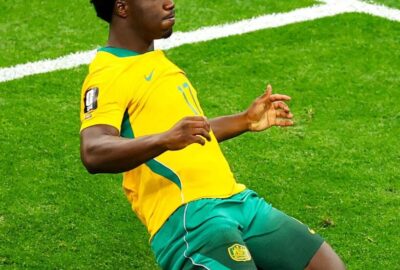
One of the loudest cheers of the night came when Clement Mzize of Tanzania won Goal of the Year. His spectacular long-range strike in the CAF Champions League was voted the best by fans across the continent and remains one of the most replayed goals of the season.
A Night of Records, Emotion, and Football Excellence
The 2025 CAF Awards will go down as one of the most memorable editions in recent years. Morocco’s dominance—from senior players to rising stars—sent a strong message about the nation’s football development path. Hakimi’s historic achievement, Chebbak’s brilliance, and the emergence of new names all contributed to a ceremony that reflected Africa’s enormous potential and vibrant football culture.
The evening celebrated not just individual stars, but the growing strength of African football on the global stage.
Football fever is sweeping through East Africa as Simba Sports Club prepares to host Petro de Luanda from Angola in a highly anticipated CAF Champions League group stage clash. The match is scheduled for Sunday, starting at 10:00 PM East Africa Time, at the iconic Benjamin Mkapa Stadium, and it has captured the attention of fans, pundits, and sports authorities across the continent.
This encounter is historic, as it represents the first-ever competitive meeting between Simba SC and Petro de Luanda. Neither team has faced each other in continental or domestic competitions before, which adds an extra layer of intrigue and uncertainty. Both sides are stepping onto the pitch with a sense of the unknown, promising a unique brand of football full of tactical maneuvers, strategic adjustments, and unpredictable moments.
For Simba SC, this match is more than just a game—it is an opportunity to assert dominance at home and demonstrate the strength of Tanzanian football on the continental stage. Petro de Luanda, known for their disciplined approach and strong performances in continental competitions, is determined to prove they can challenge East Africa’s giants and emerge with crucial points that could shape their journey in Group D.
Simba SC has been in intensive training, focusing on balancing solid defensive structure with creative attacking strategies. The coaching staff has emphasized positional awareness, set-piece efficiency, and maintaining possession under pressure. Key players are expected to carry the team’s attacking threat, while defenders and midfielders will aim to neutralize Petro de Luanda’s potent forward line. Meanwhile, Petro de Luanda arrives in Tanzania well-prepared, with a training camp dedicated to fitness, coordination, and tactical execution. Known for their resilience and tactical intelligence, the Angolan side is likely to test Simba SC’s defense with quick transitions and strategic pressing. Analysts expect both teams to start cautiously, with early minutes dominated by probing attacks, ball retention, and careful observation of each other’s strengths and weaknesses.
Fans are already making their presence felt, with tickets selling rapidly and local media covering every development. The Benjamin Mkapa Stadium is expected to be packed, creating a high-energy atmosphere that could influence the tempo and intensity of the game. For Simba supporters, this match is a chance to cheer their team to victory on home soil, while Petro de Luanda’s traveling fans are ready to back their side with unwavering enthusiasm. The anticipation extends beyond the stands, with local businesses, media outlets, and social platforms abuzz discussing potential line-ups, tactical battles, and standout players. The excitement is tangible, reflecting the importance of the game not just for the clubs but for the region’s football narrative.
Several key players are expected to shine on both sides. For Simba SC, midfield orchestrators and attacking forwards are likely to take center stage, while defenders will be tasked with neutralizing Petro’s counter-attacks. Petro de Luanda’s seasoned players, experienced in continental competitions, will be critical in controlling possession, creating scoring opportunities, and exploiting any lapses in Simba’s defensive organization.
This game is pivotal for both teams’ campaigns in Group D. A win for Simba SC would consolidate their position in the group, energize fans, and establish early momentum in the competition. For Petro de Luanda, a victory on foreign soil would be a strong statement of intent, demonstrating their capability to compete against East Africa’s finest and sending a message to the rest of the group about their ambitions.
While predictions remain uncertain given the lack of prior encounters, analysts expect a highly competitive, tactical contest. The first half may be cautious, with both sides gauging each other’s movements and probing for weaknesses. The second half could see more open play, with attacking flair, decisive substitutions, and moments of brilliance from key players determining the outcome. Regardless of the result, this match is expected to be a memorable event. Fans will witness history being made, strategies being tested, and continental football at its intense, passionate best. Simba SC versus Petro de Luanda is not just a game; it is a celebration of African football, competition, and the unifying power of the sport.
As kickoff approaches at 10:00 PM East Africa Time on Sunday, all eyes are on Dar es Salaam. Teams are finalizing line-ups, stadium preparations are underway, and the atmosphere is electric. Whether it ends in a narrow home victory, a tactical triumph for Petro de Luanda, or a hard-fought draw, this clash will be remembered as a landmark moment for both clubs, a game that sets the tone for the rest of the CAF Champions League group stage.
Brazil and Tunisia played out a competitive 1-1 draw on Tuesday in an international friendly that kept fans on edge from the opening whistle to the final minute. The match showcased moments of quick attacking play, tight defending, and strong individual performances from both sides.
Tunisia shocked the Brazilian defense midway through the first half. A fast counterattack opened space on the right side, allowing the visitors to move the ball quickly into the box. Hazem Mastouri found the final touch, guiding a composed low shot into the corner to give Tunisia a 1-0 lead.
The goal energized the Tunisian side, who maintained a compact shape and forced Brazil to work harder for possession and space in midfield.
Brazil responded minutes before halftime. Pressure inside the Tunisian area earned the hosts a penalty after a mistimed challenge. Estêvão took responsibility for the spot-kick and converted confidently, sending the goalkeeper the wrong way and leveling the score at 1-1.
The equalizer lifted Brazil’s momentum as they finished the first half with more urgency and attacking intent.
The second half saw Brazil dominate possession, pushing Tunisia back into their own half for long periods. Brazil created several opportunities through both wings, but the finishing touch was missing. Tunisia’s defenders remained disciplined, clearing crosses and blocking shots inside the box.
Tunisia also threatened on the counter, especially in the final quarter of the match, taking advantage of Brazil’s high defensive line. However, their final passes lacked precision, preventing them from restoring their lead.
As the match progressed, both teams appeared determined to find a winner. Brazil hit the side netting from a close-range attempt, while Tunisia forced a save from a late long-range effort. Despite the tension, neither side managed to break the deadlock.
While the goals came in the first half, the second half was largely defined by strong defensive organization. Tunisia’s back line stood firm under constant pressure, while Brazil’s midfield worked tirelessly to regain possession and push the play forward.
Goalkeepers on both sides made important interventions when called upon, ensuring the score remained unchanged.
The match drew strong support, and both sets of fans witnessed a spirited contest. From early counterattacks to late pressure, the friendly had the energy of a competitive fixture.
Both teams are expected to return to their training camps with key takeaways from the performance. Brazil will look to sharpen their finishing in upcoming matches, while Tunisia will take confidence from holding one of the world’s strongest football nations to a draw.
The 1-1 result reflects a balanced and hard-fought encounter — one that offered exciting moments, solid teamwork, and a glimpse of what both sides are preparing for in their next international commitments.
On Tuesday, November 18, 2025, a major internet disruption occurred after Cloudflare, one of the world’s leading internet security and traffic management companies, suffered a large system failure. The outage affected millions of users globally and caused several of the world’s biggest websites and apps to go offline.
According to Cloudflare, the issue began at around 6:20 a.m. Eastern Time when the company detected an unusual spike of traffic hitting one of its internal services. This sudden traffic surge caused errors across Cloudflare’s global network and prevented websites from loading normally. Users in many countries received error messages such as “internal server error” or “service unavailable,” making it impossible to access certain websites.
The outage heavily affected platforms that depend on Cloudflare’s network and security services. Among the companies impacted were X (formerly Twitter), ChatGPT, Spotify, Canva, Discord, and several crypto-related websites. Public service platforms such as NJ Transit and major news websites also experienced problems. Even outage tracking platforms like Downdetector struggled to load, which made it difficult for users to confirm what was happening.
For many businesses, the outage resulted in temporary service failures, slow loading times, or complete downtime. Some companies rely on Cloudflare for content delivery, DNS management, and protection against cyberattacks. Because of this dependency, when Cloudflare went down, the effects spread quickly across the internet. Many users were left frustrated as they were unable to communicate, work, or access essential online tools.
By around 9:42 a.m. Eastern Time, Cloudflare announced that it had implemented a fix and that services were beginning to stabilize. However, the company warned that some customers might continue experiencing limited disruptions during the recovery period. Cloudflare also noted that part of its Access and WARP systems had to be temporarily disabled during the fix, but were later restored.
Experts say this incident highlights how much of the internet depends on a small number of infrastructure companies. When a major provider like Cloudflare has a problem, many unrelated websites are affected at the same time. The outage has raised discussions about whether businesses should rely on multiple providers to avoid large-scale disruptions in the future.
Cloudflare is expected to release a detailed report explaining the cause of the incident, how it was resolved, and what improvements will be made to prevent similar events. For now, most affected websites are back online and functioning normally.
In summary, today’s Cloudflare outage served as a reminder of how connected the modern internet is. A single technical problem at one infrastructure provider can interrupt communication, entertainment, business operations, and even public services around the world.
Prominent Kenyan lawyer Chacha Mwita has been arrested by the Anti-Terrorism Police Unit (ATPU) over allegations of facilitating terrorist activities. Mwita, who is well known for defending clients in terrorism-related cases, was apprehended in Mombasa and later transferred to Nairobi as investigations intensify.
Accusations by Investigators
According to investigators, Mwita is suspected of being linked to a recruitment and facilitation network operating along Kenya’s Coast region. Authorities believe the group has been involved in helping young people join extremist organisations and may also be connected to a wider terror-financing structure.
Detectives say they have traced several mobile numbers and digital transactions—allegedly linked to cryptocurrency accounts—that they believe form part of a financial system used to support the activities of the network. The ATPU claims Mwita received funds associated with these accounts, prompting further scrutiny.
Defence Response
Mwita’s legal team strongly denies the allegations, arguing that he is being targeted because of his work representing terror suspects in court. His lawyers insist that providing legal services, even to individuals accused of terrorism, cannot be interpreted as aiding terror activities.
They warn that the arrest sets a dangerous precedent, one that could intimidate other defence lawyers handling sensitive national security cases.
Investigations Continue
The ATPU is seeking permission to hold Mwita in custody for several days as investigations continue. If granted, he will remain detained in Nairobi to allow detectives more time to examine digital records, financial transactions, and communication data believed to be linked to a broader syndicate.
Authorities say more arrests may follow as they pursue what they describe as an organised terror facilitation ring.
A High-Profile Twist
Mwita’s arrest has sparked widespread attention due to his long-standing role as a defence lawyer in high-profile terrorism cases. For many years, he has appeared in court defending individuals accused of supporting extremist groups—a role that some believe may have contributed to the intense scrutiny now focused on him.
Wider Implications
The case has raised important questions about the balance between national security and the rights of legal practitioners. While authorities describe the arrest as a breakthrough in dismantling a dangerous network, legal experts caution against criminalizing lawyers for the work they do in court.
As investigations continue, the country will be watching closely to see whether the allegations lead to formal charges—or whether this becomes a test case for the protection of legal representation in terrorism-related trials.
Tanzanian hip hop artist known as ‘Roma Mkatoliki’, has released his new song titled ‘Teremsha bunduki’.
In the song, the artist shows that he does not agree with what may be the authorities of civil protection and security not doing the right thing for citizens where it has been seen that they are being used by other people for their own interests.
Tanzanian Bongofleva artist, ‘Ally Swear’, has dropped his new song titled ‘Kigego’.
This song is produced by ‘Mo Fire’.
Download this song via the link below. Don’t forget to share it with your friends.